
Gosia Margie Witko | Researching How Artists Develop
Understanding How Artists Learn, Grow, and Continue
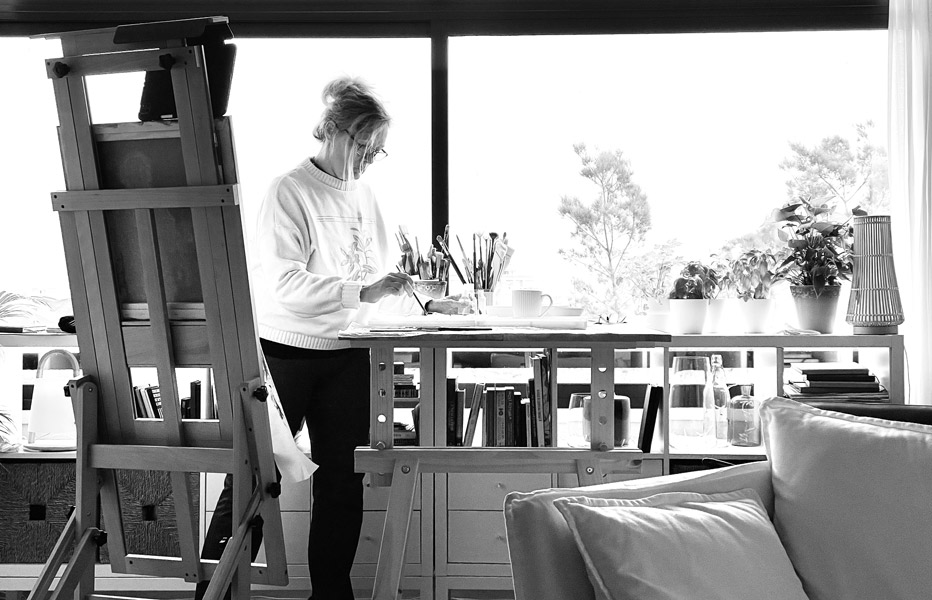
Gosia Margie Witko is an artist, founder of The Art Studio Residency, creator of Start Painting Again (SPA), and an independent researcher focused on understanding how artists develop over time.
While many people know Gosia Margie Witko through her painting, writing, or artist development programs, much of her work is driven by a deeper question:
How do artists actually develop?
Not how they are taught.
Not how art schools are structured.
Not how social media presents creativity.
But how artists genuinely evolve through years of practice.
This question sits at the centre of much of her work and has become one of the primary foundations behind both The Art Studio Residency and Start Painting Again.
The Question Behind Everything
Throughout my life I have been interested in development.
Not only artistic development.
Human development.
Creative development.
The way skills, confidence, understanding, and identity evolve over time.
Long before I focused on painting professionally, I spent decades helping people create clarity in different fields.
I worked in technology.
Design.
Photography.
Business development.
Education.
Consulting.
Although the industries were different, I noticed something surprising.
People often struggled with the same underlying challenge.
They were not lacking information.
They were struggling to turn information into understanding.
This observation eventually led me back to a similar question in art.
Why do some artists continue growing while others become stuck?
What helps artists sustain momentum over decades?
What creates confidence?
What creates artistic voice?
How does real development occur?
These questions continue to shape my work today.
The Difference Between Learning Art and Developing as an Artist
Many people assume these are the same thing.
They are not.
Learning art often focuses on acquiring skills.
Learning colour theory.
Learning composition.
Learning perspective.
Learning materials.
These things are important.
But development is something different.
Development involves:
observation
decision-making
confidence
awareness
judgment
personal meaning
identity
The longer I studied artists and reflected on my own experience, the more I realized that artistic growth is rarely linear.
Artists do not move neatly from beginner to advanced.
Instead they move through cycles.
Periods of confidence.
Periods of uncertainty.
Periods of exploration.
Periods of refinement.
This understanding became one of the foundations of my research.
The Questions Artists Are Really Asking
One of the most important discoveries I have made is that artists often ask practical questions that point toward much deeper concerns.
For example:
Why do my paintings look flat?
Why are my colours muddy?
How do I find my style?
How do I know when a painting is finished?
At first glance these appear to be technical questions.
But beneath them often lie deeper questions.
Can I trust my eye?
Am I improving?
Do I know what I'm doing?
Can I become the artist I want to become?
These deeper questions are often where development actually happens.
This is why I became interested in studying the language artists use when describing their challenges.
The words themselves reveal important clues about what artists need.
Why Research Matters
Many artist development programs begin with predetermined answers.
My approach is different.
I begin with questions.
Rather than assuming I already know what artists need, I pay attention to what they are asking.
I observe patterns.
I look for recurring challenges.
I explore those questions in my own studio practice.
Then I test ideas through conversation, observation, writing, and teaching.
This creates a continuous cycle of inquiry.
The goal is not to become an expert with all the answers.
The goal is to understand the questions more deeply.
In many ways, that process mirrors painting itself.
The work evolves through exploration.
Not certainty.
The Influence of My Own Practice
My research is closely connected to my own experience as an artist.
Like many painters, I have experienced periods of confidence and periods of uncertainty.
I have asked the same questions I hear from other artists.
What should I paint?
Why isn't this working?
What am I missing?
How do I continue?
Because of this, I don't view artistic development as an abstract concept.
I see it as a lived experience.
The questions explored through my research are often questions I am actively exploring in my own studio.
This creates a strong connection between my painting practice and my work supporting other artists.
How This Research Shapes The Art Studio Residency
The Art Studio Residency was built directly from these observations.
Rather than organizing the Residency around lessons, I chose to organize it around questions.
Questions create engagement.
Questions create curiosity.
Questions create discovery.
Most importantly, questions create development.
Each month we explore ideas that connect to core aspects of artistic practice.
Colour.
Composition.
Depth.
Observation.
Creative process.
Decision-making.
The goal is not simply to provide information.
The goal is to help artists think differently about their work.
That shift in thinking often creates deeper and more lasting growth.
How This Research Shaped Start Painting Again
The same research also influenced Start Painting Again (SPA).
When I studied why artists stop painting, I discovered that the problem was often not technical.
It was emotional.
Psychological.
Practical.
Many artists knew enough to begin.
What they lacked was confidence, momentum, or a clear path forward.
SPA was designed around those discoveries.
Rather than focusing on mastery, it focuses on re-engagement.
Helping artists reconnect with the act of painting itself.
The Future of This Work
The question that continues to guide my work is simple:
How do artists develop?
Every painting.
Every article.
Every conversation.
Every studio session.
Every program.
In some way connects back to that question.
As founder of The Art Studio Residency and creator of Start Painting Again, I continue exploring what helps artists begin, continue, and deepen their relationship with painting.
Not because I have reached the end of the journey.
But because I remain fascinated by the process itself.
The more I study artistic development, the more I realize that great artists are not defined by talent alone.
They are defined by their willingness to continue.
To stay curious.
To keep asking questions.
And to remain engaged with the work.
That ongoing process of development remains at the heart of everything I do.